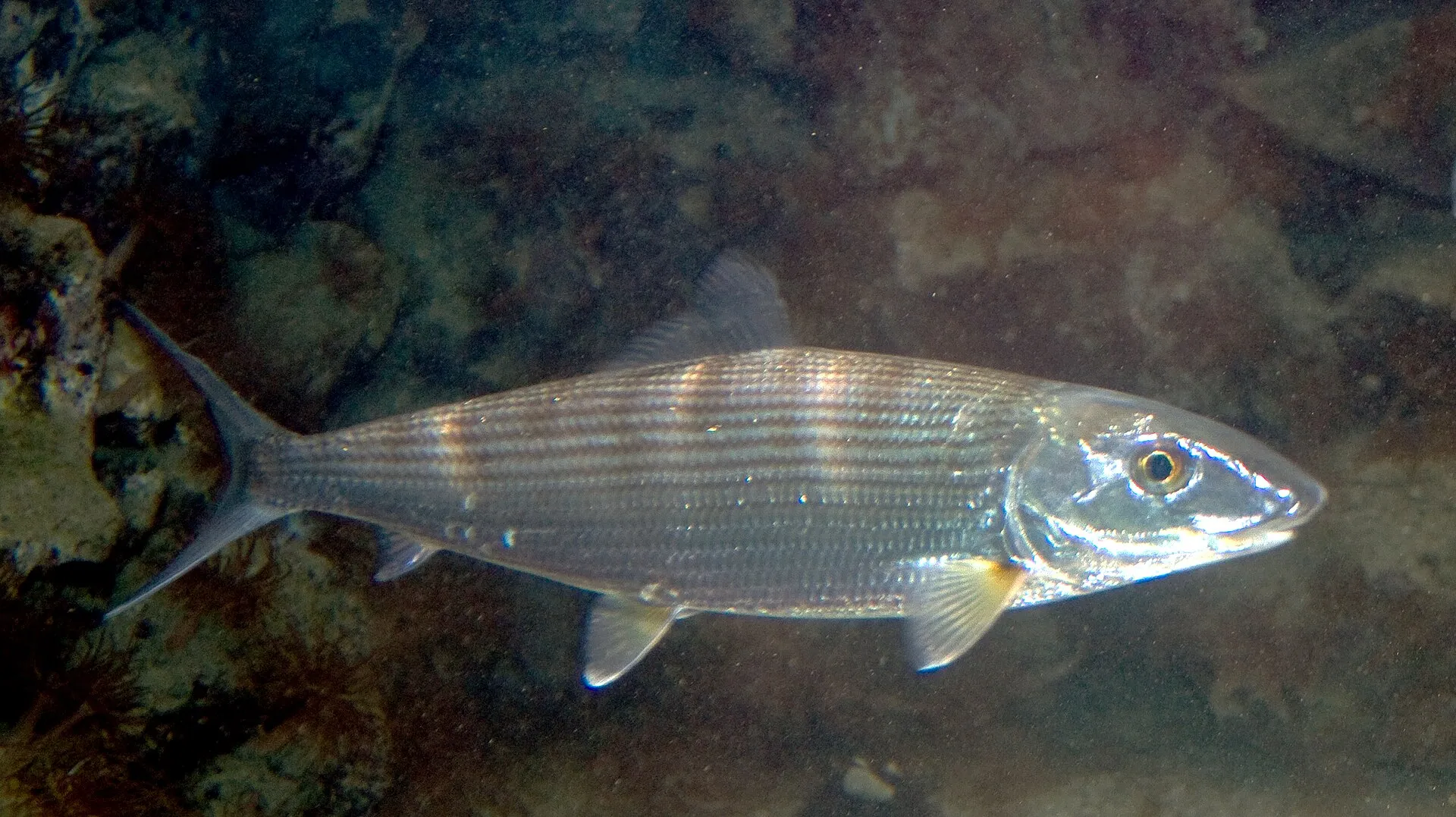
A bonefish (Albula vulpes). This photograph was not taken on Andros. Photo: Brian Gratwicke, CC BY 2.0.

Why here
The bights of Andros, with their mangrove creeks, shallow shores and banks, make up one of the largest areas of bonefish habitat anywhere. Mangrove Cay is in the centre of it. From the north end, skiffs run into the North and Middle Bights. From the south, they run into the South Bight. Guides can also cross to the remote west side.
Anglers come for big fish. Flats near the cay carry names like “the promised land” and “the land of the giants”.
Guided fishing
The island has around a dozen independent professional guides, plus those attached to the lodges. Most grew up fishing, diving and sponging on this water. A guided day means a flats skiff, a poling platform and access to water you cannot reach on foot.
Book through your lodge, or ask it to recommend an independent guide. In the main season, reserve guide days when you reserve your room.
Fishing on your own
Mangrove Cay is one of the better places in The Bahamas for a walk-and-wade angler. A detailed account in Tail Fly Fishing Magazine divides the wadeable water into four areas:
| Area | Access | Notes |
|---|---|---|
| Burnt Rock to Swain’s Cay | Car or bicycle | About 1.5 miles. Best near Swain’s Cay itself and on the Burnt Rock flat. |
| Swain’s Cay south to Victoria Point | Car or bicycle | About 2.75 miles. Start where the mangroves meet the water and fish south toward the blue hole. |
| Turtle Cove to the South Bight | Car or bicycle | The largest road-access flat, running about 1.2 miles southwest to the mouth of the bight. |
| The South Bight | Kayak from Lisbon Creek | The least pressured water for an unguided angler, with firm wading on the southern shore. |
Tides
A low and incoming tide is the usual choice. Fish leave the flats for deeper water as the tide falls and filter back as it rises. In the South Bight, paddle with the flow and walk back toward the incoming fish.
What to expect
Fish close to the road have seen plenty of flies. Use long leaders, small flies, quiet wading and accurate casts. Blank days happen.
Gear
- Rods: 8 and 9 weight.
- Reel and line: saltwater reel, 200 yards of backing, floating bonefish line.
- Leaders: 16 to 20 lb tippet from a skiff. About 12 lb fluorocarbon on leaders up to 14 feet when wading for wary fish.
- Flies: sizes 4 and 6 for wading (Gotchas, Crazy Charlies, mantis shrimp and small crab patterns), sizes 2 and 4 with more weight and flash from a boat.
- Also: polarised glasses, flats boots, sun protection, a waist pack and plenty of water.
Other species
Guides also target tarpon, permit and barracuda when conditions allow, and the reef and deep water off the east coast hold snapper, grouper and pelagic fish.
Rules
Flats fishing in The Bahamas is regulated, and visiting anglers need a personal licence. Bonefish are catch and release. Check the current Department of Marine Resources rules before you travel, or ask your lodge to arrange the licence.
Questions people ask
Is Mangrove Cay good for bonefishing?
Yes. Mangrove Cay sits between the Middle Bight and the South Bight in the centre of Andros, which is widely called the bonefishing capital of the world. Anglers can reach the bights, the east coast flats and, with a guide, the west side.
Can you fish for bonefish on Mangrove Cay without a guide?
Yes. Several flats along the east coast can be waded from the road, and the South Bight can be reached by kayak from Lisbon Creek. The fish near the road see more anglers and are harder to fool than those reached by boat.
What fly rod do I need for bonefish on Andros?
An 8 weight is standard, with a 9 weight for wind and bigger fish. Bring a saltwater reel with at least 200 yards of backing and a floating line.
How big are the bonefish at Mangrove Cay?
Andros is known for large bonefish. Fish of eight pounds and more are hooked on the flats around Mangrove Cay, and local flats carry nicknames such as "the land of the giants".